
A brief look at recent work by Tan et al., 2025
The Problem: Stem Cells Struggle in Harsh, Inflamed Environments
Mesenchymal stem cells (MSCs) are widely studied because they can reduce inflammation and help damaged tissues repair themselves. They’re being explored for conditions such as arthritis, spinal disc degeneration, and chronic inflammation.
But there’s a major challenge:
When MSCs are placed into injured or inflamed tissue, many of them die quickly.
These environments are tough:
- very little nutrient support
- no serum
- high levels of inflammatory molecules
Even the MSCs that survive often don’t release enough helpful, calming signals to create a therapeutic effect.
Because of this, researchers are looking for ways to:
- protect MSCs in stressful environments,
- guide their behaviour, and
- improve their anti-inflammatory activity ideally without relying on expensive growth factors.
This new preprint explores one promising solution: modifying alginate hydrogels with bioactive peptides that “coach” MSCs to behave in more therapeutic ways.
(Important: The researchers did not use Smart MCs products. This is an independent research summary.)
What Did the Researchers Create?
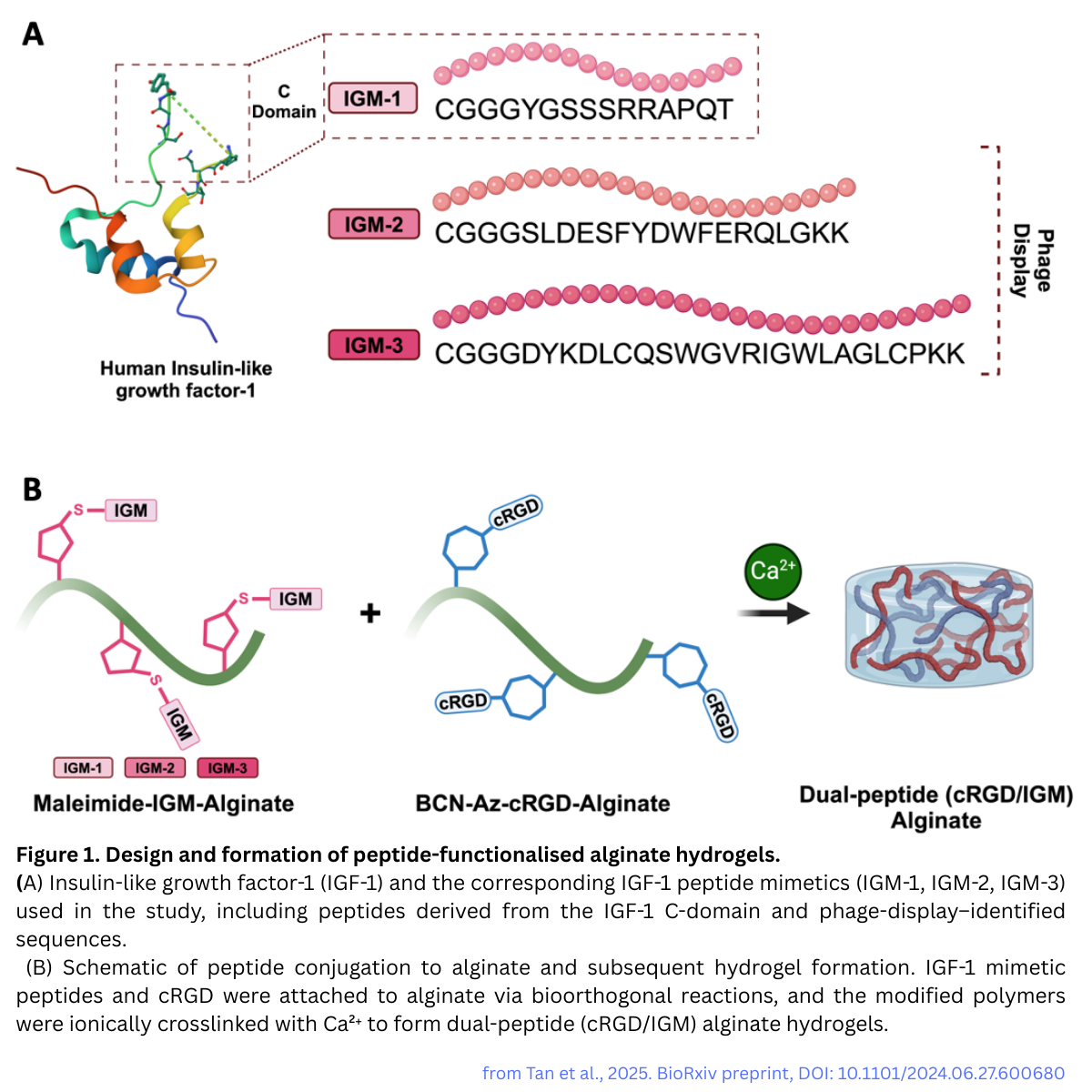
The team built alginate hydrogels, soft, biocompatible materials made from seaweed, and attached two types of short signalling peptides to them.
Here are the peptides explained simply:
What is cRGD?
- improves cell grip
- supports healthy cell shape
- helps cells feel “anchored” in the material
What are IGF-1 mimetic peptides (IGM-1, IGM-2, IGM-3)?
- Survive
- Repair
- activate beneficial pathways
By combining these peptides with alginate, the researchers turned a simple gel into a bioactive, instructive material.
Why the cRGD + IGM-3 Combination Works Best
One of the strongest findings is that MSCs responded best when both signals were present:
**cRGD (for attachment)
IGM-3 (for survival signals)**
Together, this dual-peptide alginate hydrogel helped MSCs:
- survive better under serum-free, inflammatory stress
- activate key survival pathways (Akt and ERK)
- reduce inflammatory molecule production
- maintain healthier shapes and behaviour
This shows how a material can influence cell behaviour simply by presenting the right combination of signals on its surface.
Helping MSCs Stay Calm During Inflammation
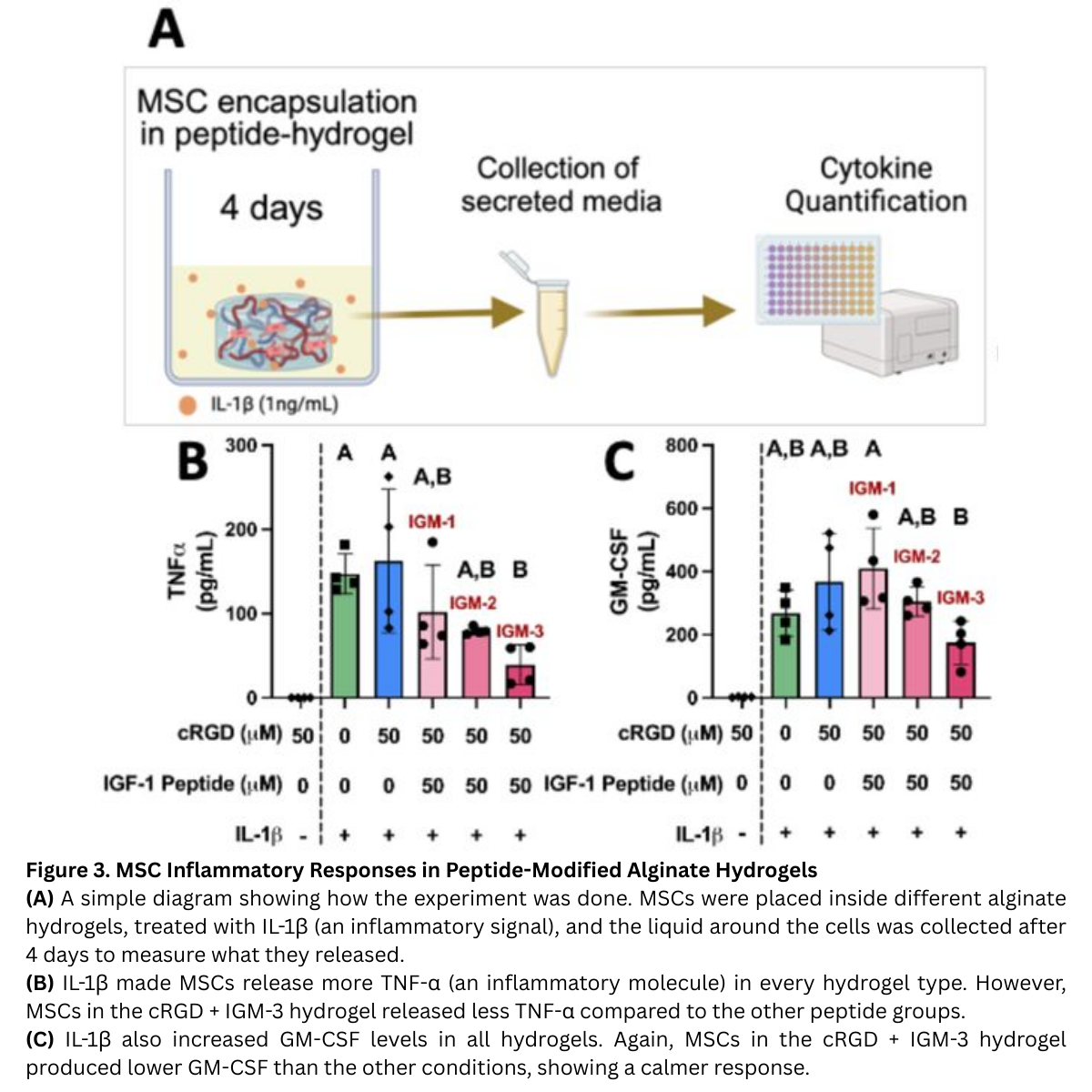
The researchers tested the hydrogels under a very inflammatory condition using IL-1β, a molecule strongly linked to tissue degeneration.
MSCs inside the cRGD + IGM-3 alginate hydrogel:
- released less TNF-α
- released less GM-CSF
- kept more stable levels of TIMPs (protective proteins)
This means the hydrogel helped MSCs maintain a calmer, more controlled, anti-inflammatory state, which is exactly what is needed for therapeutic use.
Testing the Effects on Human Degenerated Disc Cells
To see whether these changes actually help human tissue cells, the researchers co-cultured:
- MSCs inside peptide-functionalised alginateWith
- human intervertebral disc (IVD) cells from degenerated discs
The results were especially promising.
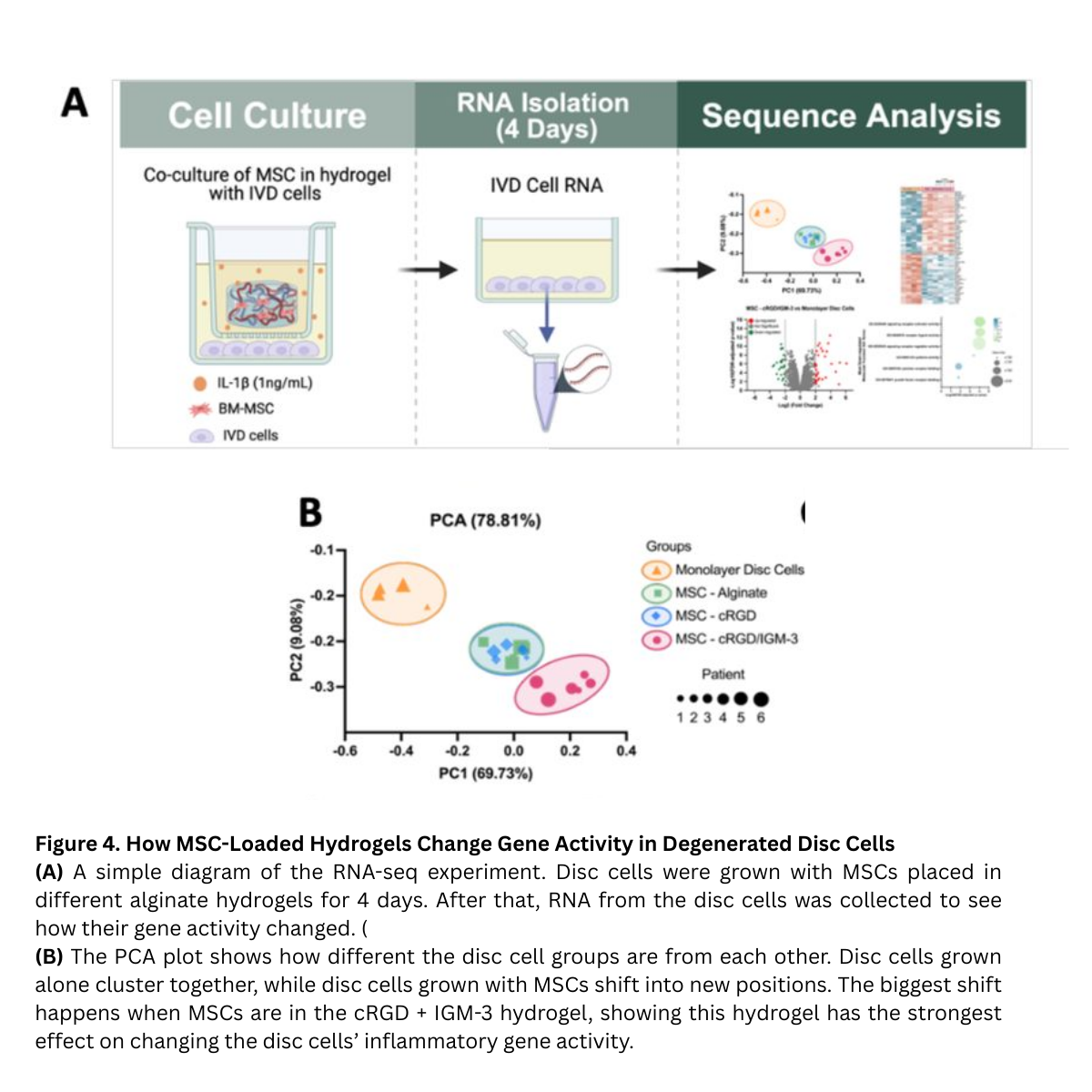
IVD cells showed a clear drop in inflammatory gene expression when paired with MSCs in the cRGD + IGM-3 hydrogel.
Important inflammation-related genes, such as IL-1β, IL23A and CSF2, were significantly reduced.
This means the alginate hydrogel didn’t just support the MSCs; it improved the quality of the signals MSCs send to damaged human tissue.
Simple Takeaway
- helps MSCs survive harsh conditions
- reduces inflammatory signals
- supports better communication with damaged human tissues
It’s a major step forward in developing smarter, more therapeutic biomaterials.




Leave A Comment