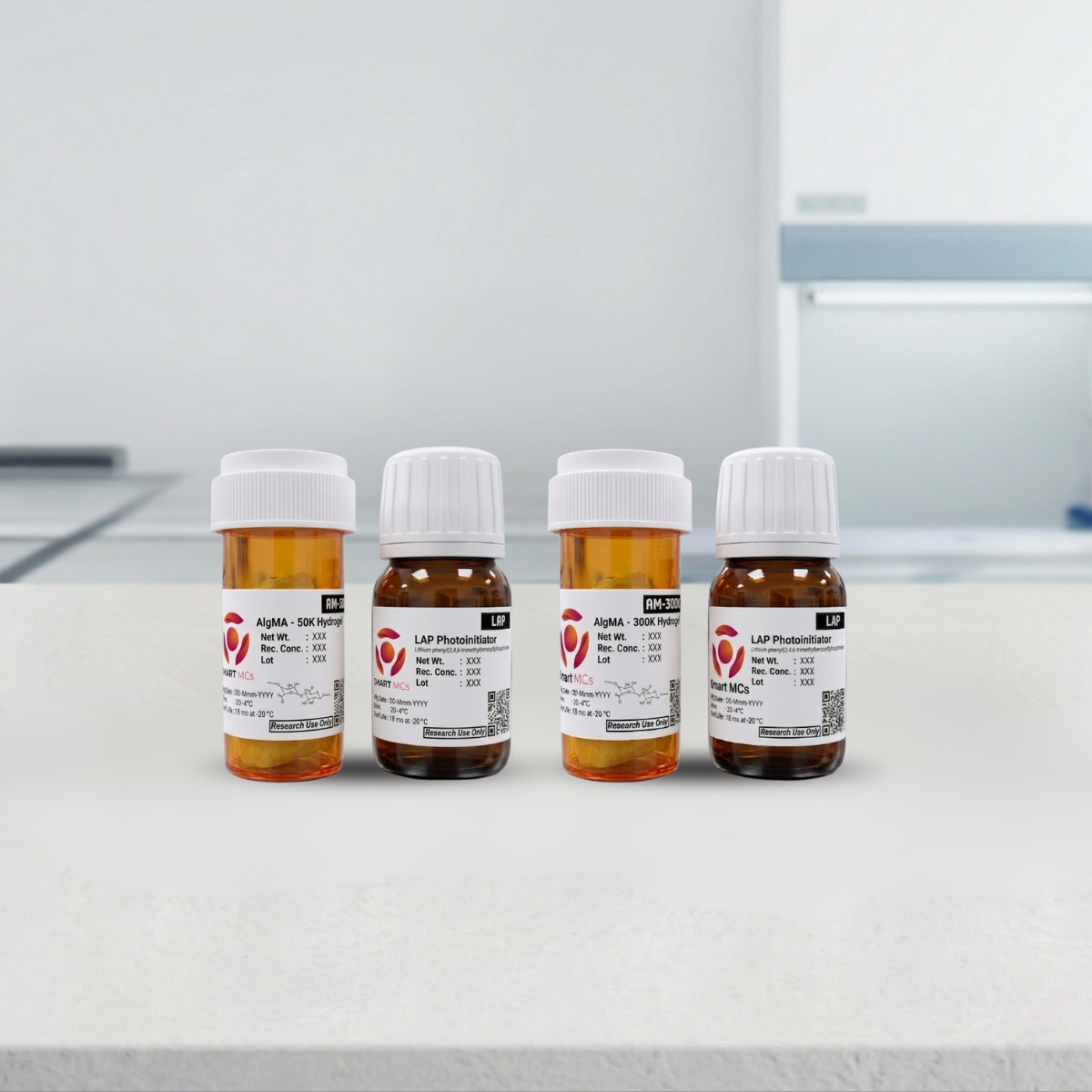
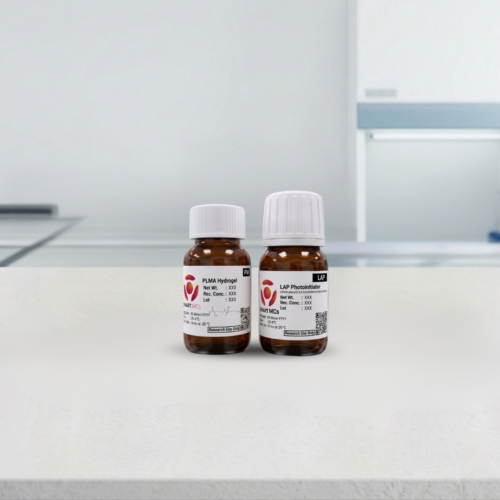
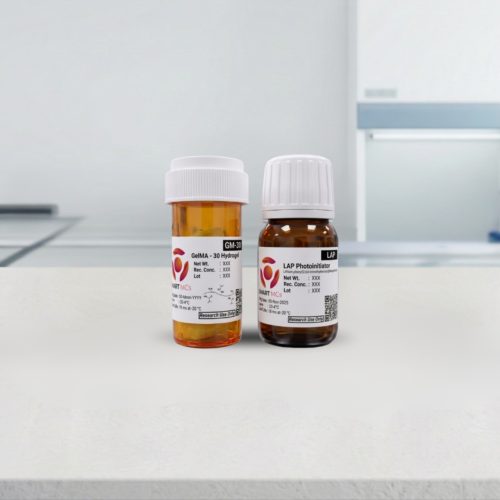
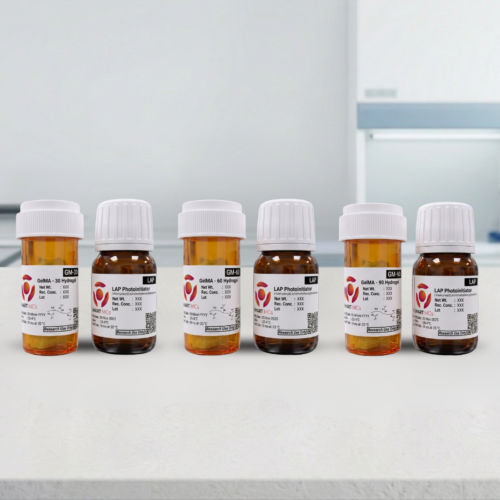
Alginate Methacryloyl (AlgMA) is a photocrosslinkable hydrogel for 3D cell culture, tissue engineering, and bioprinting. Derived from sodium alginate and modified for light-induced crosslinking, AlgMA provides a controlled and reproducible alternative to traditional ionic (calcium) gelation.
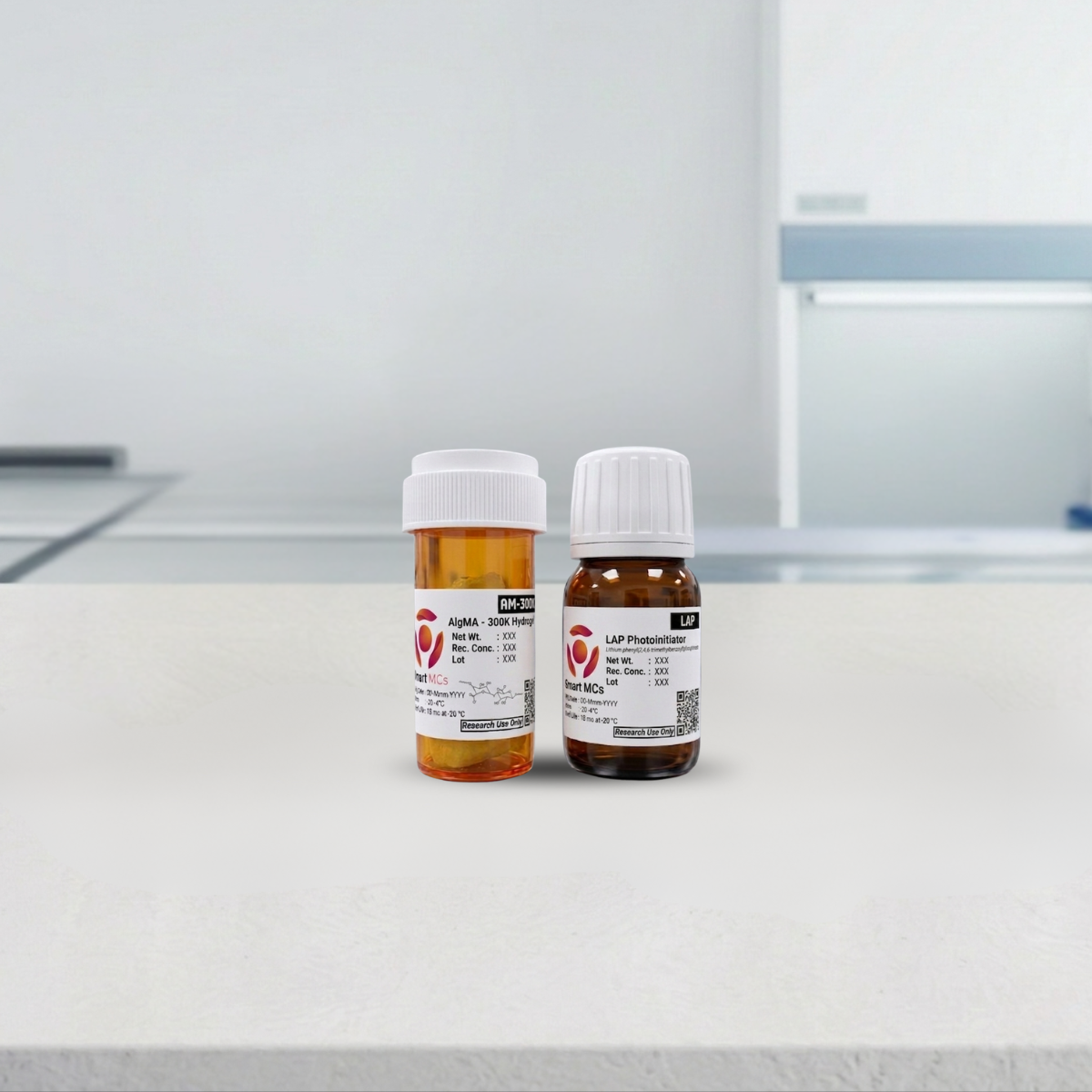
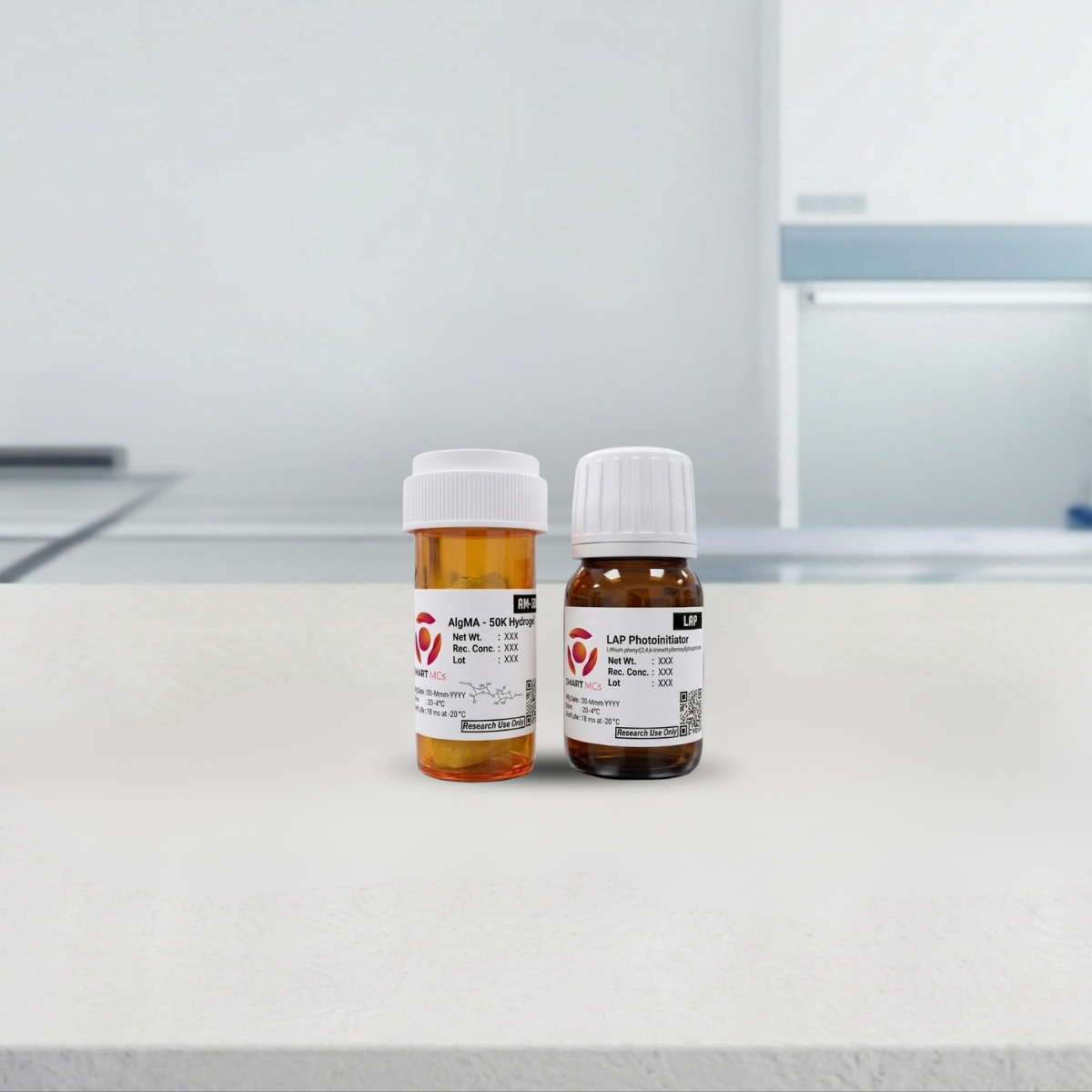
Smart MCs offers AlgMA in two molecular weight variants, AlgMA-50K and AlgMA-300K, allowing researchers to select the formulation best suited to their application. Each kit includes AlgMA and LAP photoinitiator for fast, reliable hydrogel formation under UV or visible light.
For research use only. Not intended for human clinical applications.
What’s Included
Each AlgMA Hydrogel Set includes AlgMA with a white, sponge-like appearance and complementary LAP photoinitiator.
| SKU | AlgMA Size | LAP Included | Degree of Functionalisation | Molecular Weight |
|---|
| AlgMA-50K-0.5g | 0.5 g | 0.025 g | 20–30% | 50–100 kDa |
| AlgMA-50K-5g | 5 g | 0.25 g | 20–30% | 50–100 kDa |
| AlgMA-300K-0.2g | 0.2 g | 0.01 g | 35–45% | 250–350 kDa |
| AlgMA-300K-2g | 2 g | 0.10 g | 35–45% | 250–350 kDa |
AlgMA-50K has medium viscosity and is suited to applications requiring easier handling, higher stiffness, and good structural definition.
AlgMA-300K has higher viscosity and forms softer, more flexible hydrogels suitable for cell encapsulation and soft tissue models.
Both formulations can be used alone or combined with other hydrogels such as GelMA and HAMA.
Performance
AlgMA is designed to provide consistent performance across a range of hydrogel applications.
- Rapid light-induced crosslinking (typically within ~20 seconds)
- Tunable mechanical properties
- Wide range of hydrogel stiffness
- Excellent printability and shape retention
- Detailed characterisation data available on request
Applications
Suitable for:
- 3D cell encapsulation
- Tissue engineering
- 3D bioprinting
- Drug delivery and release
- Biofabrication
- Composite hydrogel systems
Why Use AlgMA?
AlgMA provides a stable, photocrosslinkable hydrogel platform that enables greater control over gel formation than conventional alginate hydrogels. Its tunable mechanical properties, reproducible light-induced crosslinking, and compatibility with other biomaterials make it well suited for tissue engineering, biofabrication, and advanced 3D cell culture applications.
Custom Options
Custom AlgMA formulations are available for specialised research applications, including:
- Peptide-functionalised hydrogels
- Composite hydrogels (e.g. AlgMA + GelMA systems)
- Tailored mechanical or structural properties
Shipping & Dispatch
| Information | Details |
|---|
| Dispatch Schedule | Orders are dispatched every Friday. |
| Order Cut-Off | Orders for in-stock products received by End of Day Wednesday (Sydney, Australia) are eligible for Friday dispatch, subject to product availability. |
| Estimated Dispatch | Up to 10 sets: Friday dispatch* Contact us for larger or customised orders and to discuss delivery timelines. |
| Shipping Within Australia | Orders are shipped via Australia Post. |
| International Shipping | Orders are shipped via DHL Express. |
| Alternative Shipping | FedEx shipping is available upon request. |
*Friday dispatch is subject to product availability.