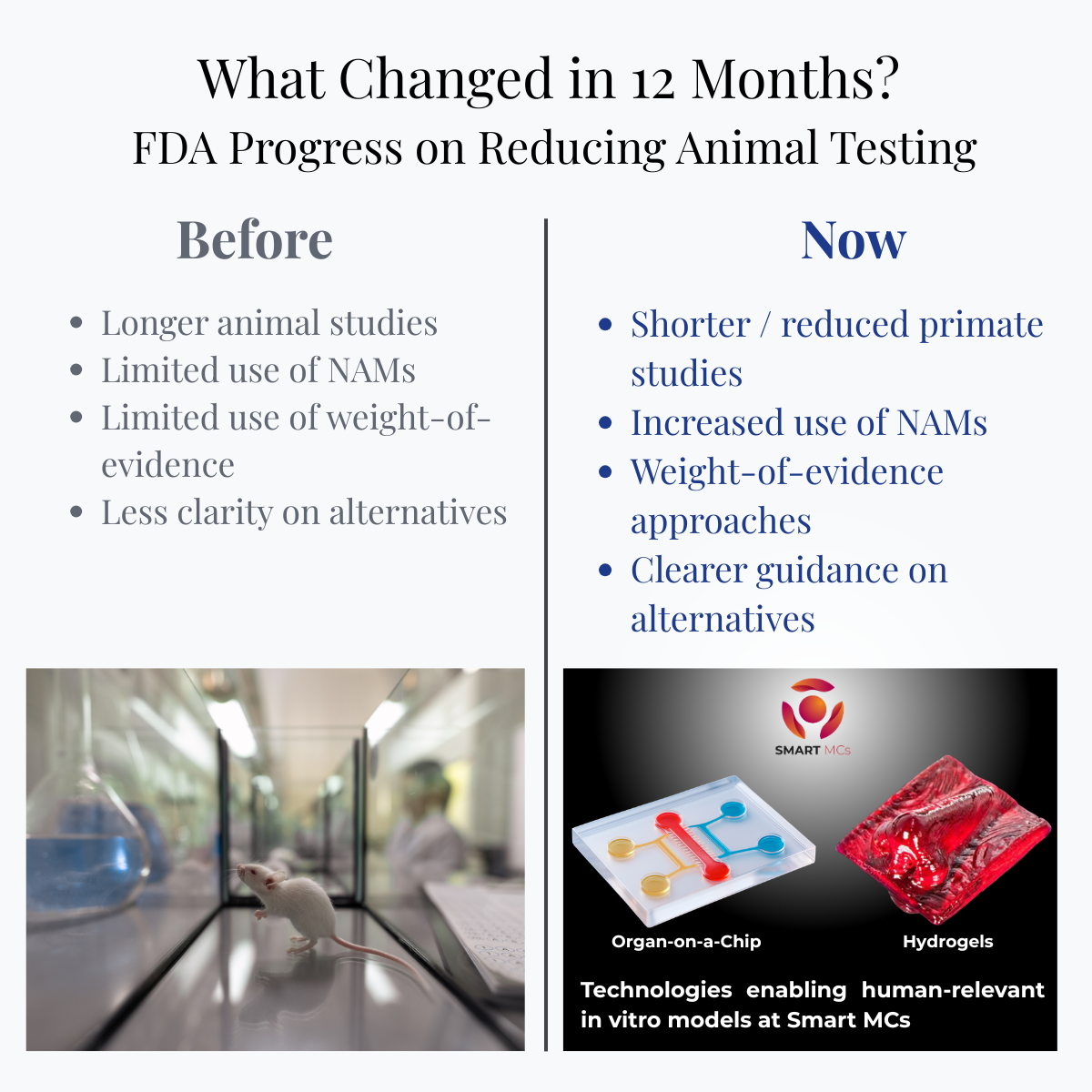
In April 2026, the U.S. Food and Drug Administration (FDA) released a one-year progress update on its Roadmap to Reducing Animal Testing in Preclinical Safety Studies. The report highlights how early policy commitments are now being implemented across drug development, signalling a broader shift toward human-relevant testing methods.
Following the roadmap introduced in April 2025, the FDA has begun expanding the use of New Approach Methodologies (NAMs) within regulatory processes, with measurable progress already achieved.
From Policy to Practice
When the FDA first introduced its roadmap, it outlined a long-term objective: reduce reliance on animal testing while improving the accuracy of preclinical safety evaluation.
One year later, that objective is beginning to take shape. The agency has established regulatory frameworks, validation pathways, and internal systems that allow alternative methods to be used more confidently in drug submissions.
Rather than remaining a future goal, the transition toward non-animal testing is now being actively implemented.
Key Developments in the First Year
Over the past 12 months, several important changes have been introduced that directly affect how drugs are evaluated:
- Reduced animal testing for monoclonal antibodies (mAbs)
- Updated guidance allows shorter studies, and in some cases reduced or eliminated non-human primate testing, when supported by alternative data
- Use of weight-of-evidence approaches
- Safety assessments can now combine data from multiple sources, including in vitro models and computational tools.
- Integration of AI in drug development
- The FDA has qualified its first artificial intelligence-based tool, supporting the use of predictive modelling in regulatory decisions.
- Greater clarity for alternative methods
- A new database outlines where non-animal approaches are acceptable, helping reduce uncertainty for developers.
- Movement away from animal-derived testing materials
- Updated guidance supports alternatives to horseshoe crab–based endotoxin testing, reducing reliance on animal-derived reagents.
Together, these updates show a coordinated effort to modernise drug development using more predictive, human-focused approaches.
Why Reducing Animal Testing Matters
The shift away from animal testing is driven by both scientific and practical limitations.
Animal models often fail to accurately predict human responses. As outlined in the FDA’s roadmap, a large proportion of drugs that appear safe in animals do not succeed in human trials, often due to safety or efficacy issues.
This gap creates challenges across the development pipeline, including:
- Late-stage clinical failures
- Increased development costs
- Delays in bringing therapies to patients
By incorporating NAMs, such as human cell-based systems, organ-on-a-chip platforms, and computational models, the FDA aims to improve how safety and efficacy are evaluated before clinical trials begin.
Building the Foundation for Long-Term Change
A key outcome of the first year is the establishment of infrastructure that supports ongoing adoption of non-animal methods.
This includes:
- A formal pathway for qualifying new drug development tools
- Collaboration between the FDA and NIH to support validation and research
- Internal review frameworks for evaluating NAM-based data
- Alignment with international regulators to support global adoption
These developments are essential for scaling the use of alternative methods across the industry.
What Comes Next
While initial efforts have focused on monoclonal antibodies, the FDA plans to extend these approaches to other therapeutic areas.
Future priorities include:
- Expanding the use of NAMs across more drug classes
- Increasing validation of human-relevant models
- Developing shared data resources for toxicity and safety
- Strengthening global regulatory alignment
The long-term direction is clear: human-relevant testing methods are expected to play a central role in drug development.
Conclusion
The FDA’s one-year progress update demonstrates that reducing animal testing is no longer just a policy objective, it is increasingly being integrated into regulatory practice.
As more tools, data, and frameworks become available, the shift toward more predictive and efficient testing methods will continue to accelerate.
Supporting Human-Relevant Research
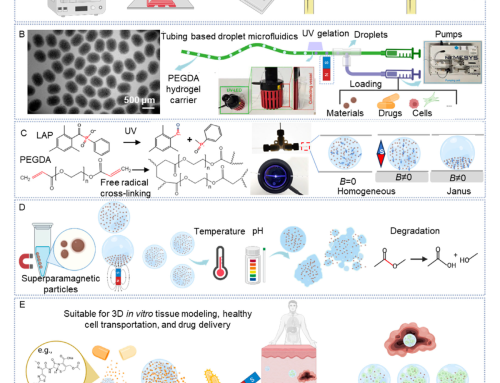
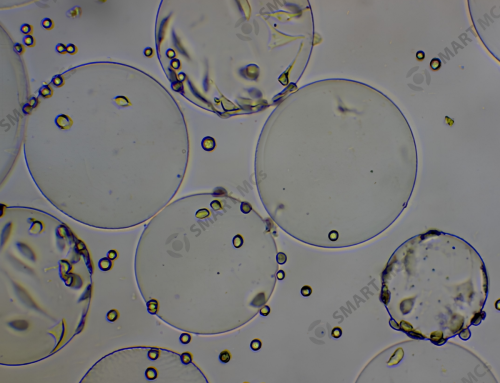
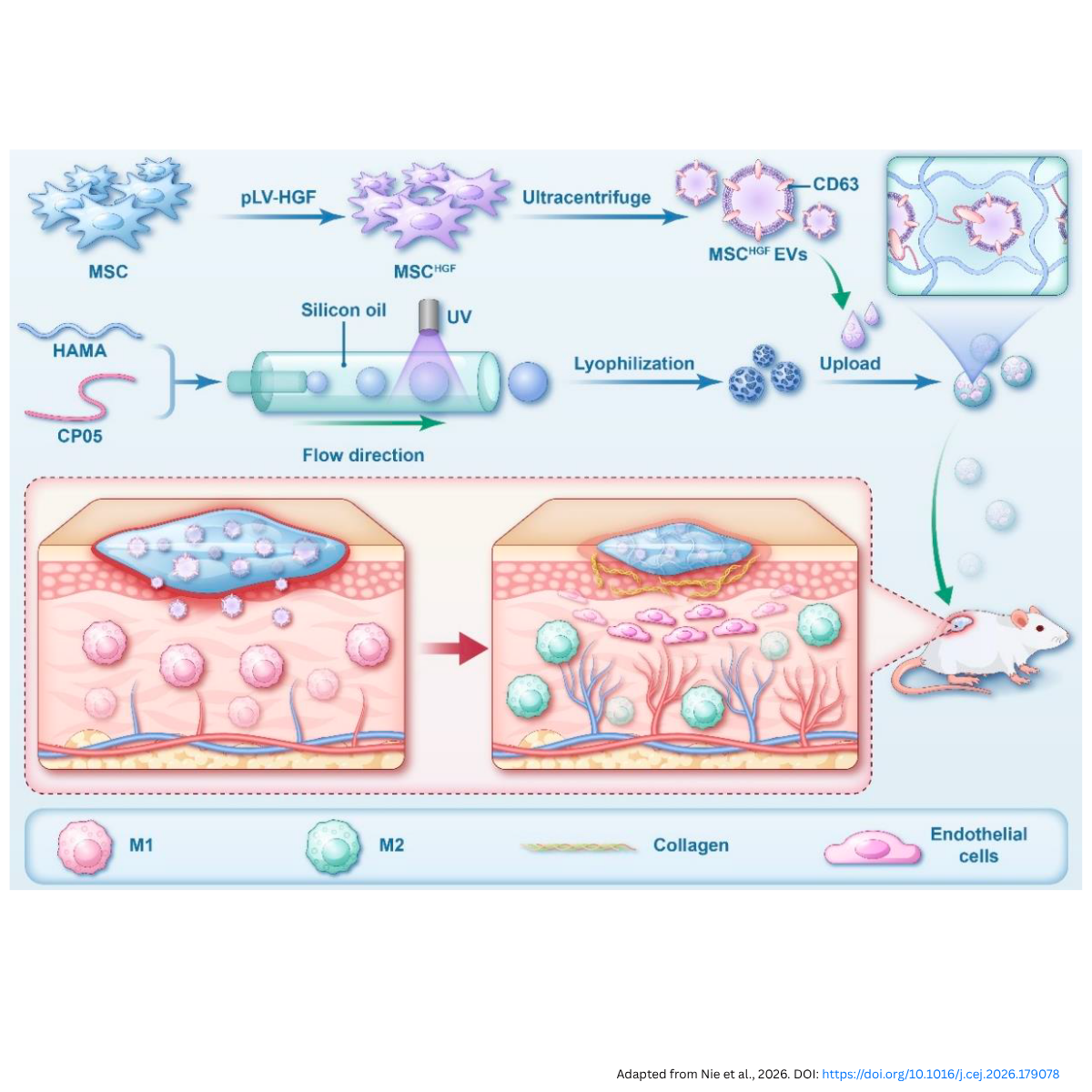
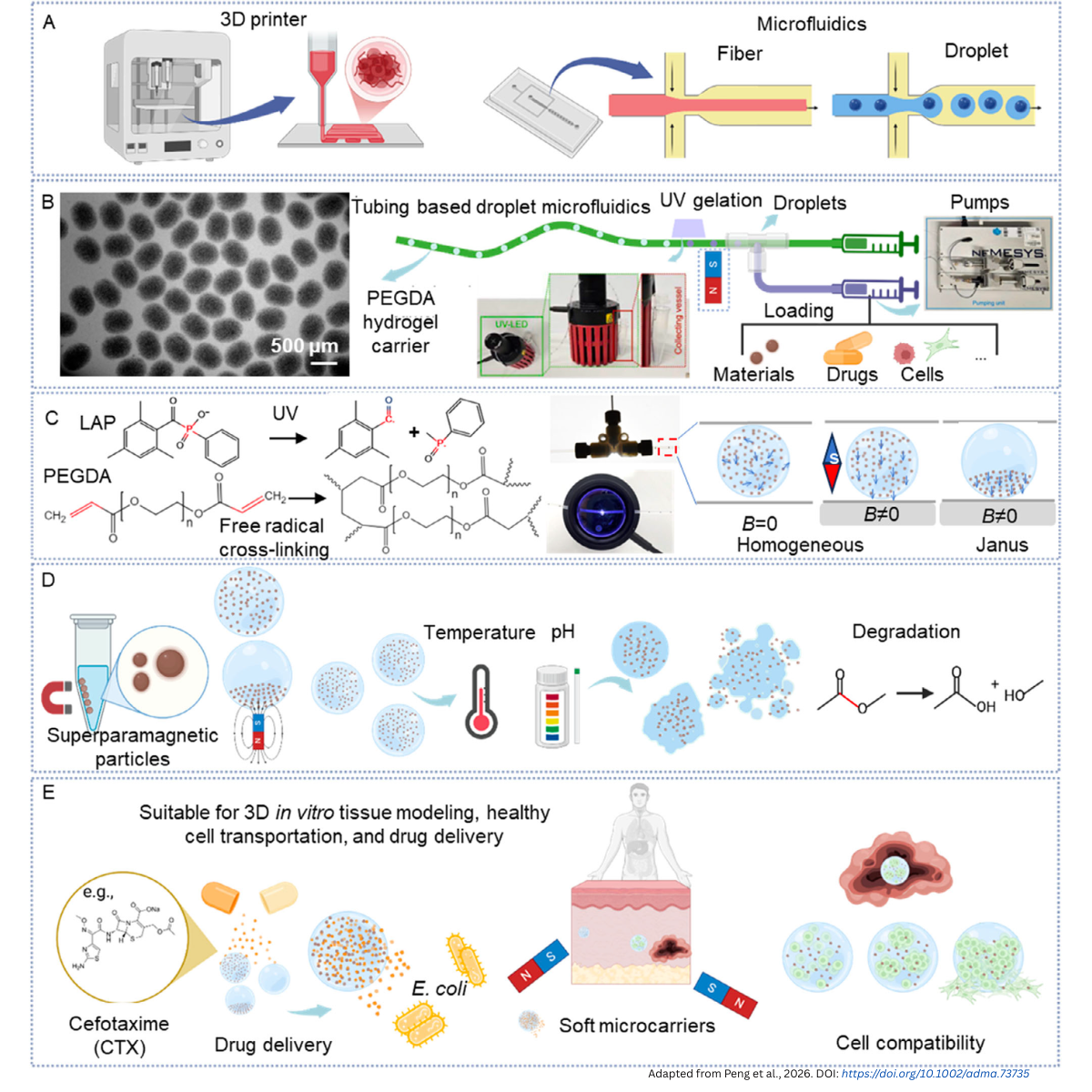
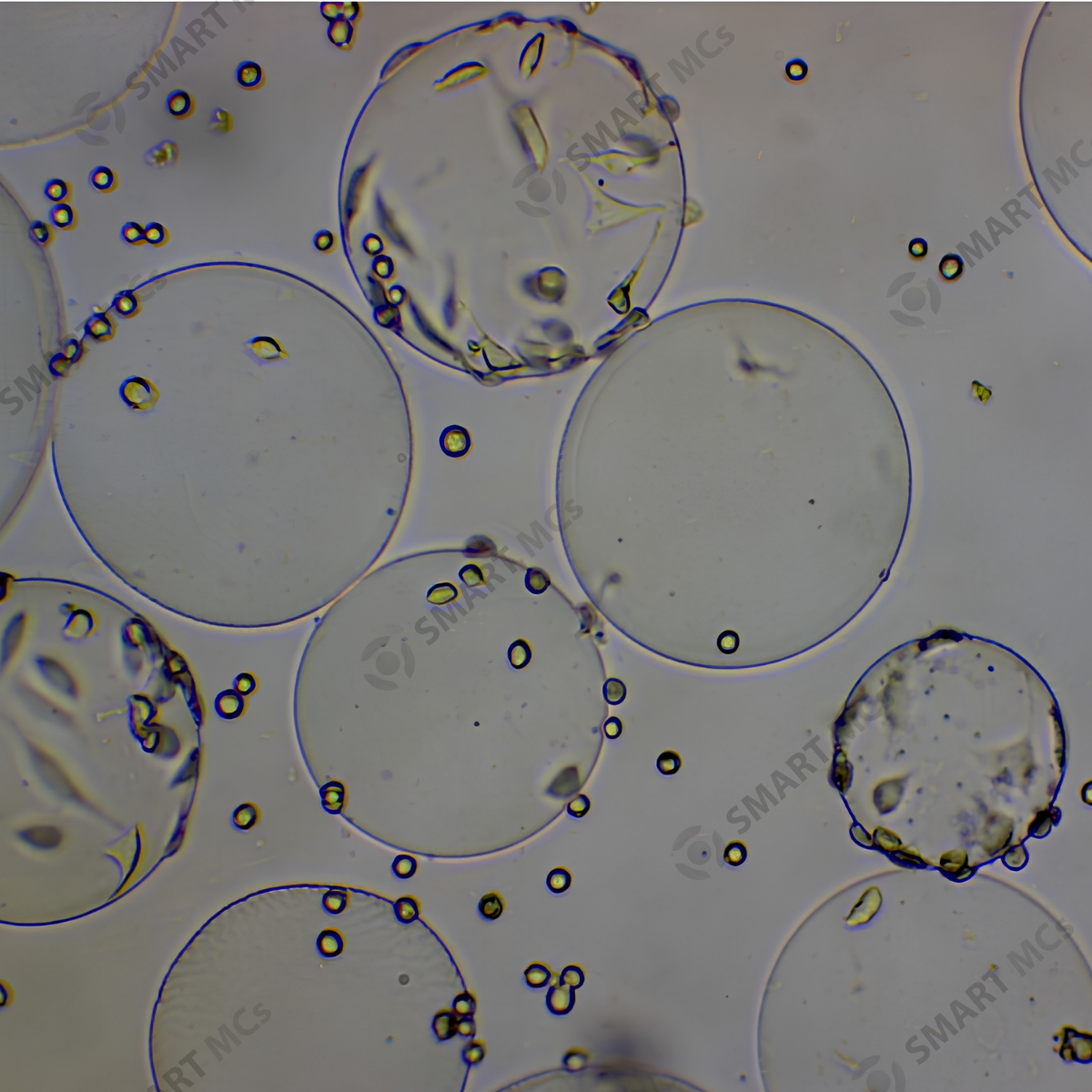
At Smart MCs, we support this transition by providing technologies for advanced cell culture and human-relevant systems. Our hydrogels and organ-on-a-chip platforms enable the development of 3D in vitro models aligned with New Approach Methodologies.
As the industry continues to evolve, access to scalable and reliable in vitro systems will be increasingly important for modern drug development.
References
U.S. Food and Drug Administration. (2026, April). Reducing animal testing in nonclinical studies: Year one progress and the path forward.
U.S. Food and Drug Administration. (2025, April). Roadmap to reducing animal testing in preclinical safety studies.